Energy & Utilities Café serves as a platform to generate casual conversations about Energy and the Utilities Industry. The content here is meant to strike curiosity and to encourage discussions on the topic for everyone, even if you are not an expert in the field – because energy matters to all.
Welcome back! This post will continue the discussion on DSM Programs. If you have not read part one , please click here.

In our last post, we began to go more in-depth into what a DSM program looks like. We learned that three main categories of DSM programs exist: Demand Response (DR), Energy Efficiency (EE) and Energy Conservation. In this post, we will talk about the latter two.
Let’s start our casual conversation.
Before we begin, we must define Energy Conservation and Energy Efficiency. The two terms are often used interchangeably, and although related, they represent different things.
Energy Conservation refers to lifestyle and behavior. For example, you can change your behavior to conserve energy by turning off the lights after you exit a room, or consolidating all your errands so you only drive once a day (or even start biking instead). With this approach, it does not matter how efficient the lightbulbs are or how fuel-efficient your car is; the things you are changing are behavioral 1.
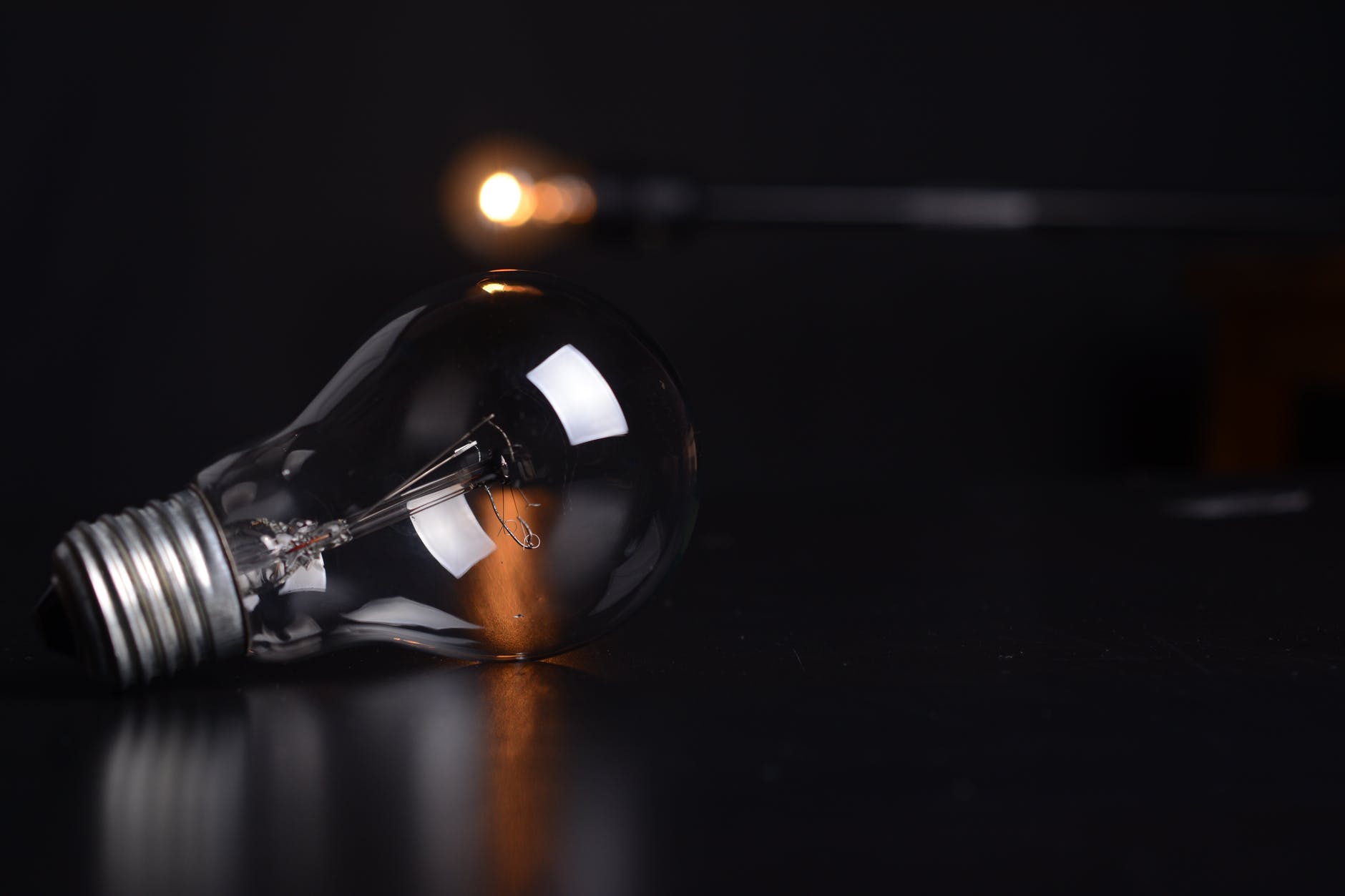
Energy Efficiency is the concept of carrying out tasks in the most effective way possible. In other words, achieving the same output by utilizing the smallest amount of input 1. As an example, let’s take a look at the lights in your house. Let’s say that you currently use incandescent light bulbs to light your house. You can replace your incandescent light bulbs for LED light bulbs, which are more electrically efficient. That means the light output, measured in lumens, is similar for a smaller input of electricity. Therefore, it takes less electricity to use all the lights in your house, but you are still getting the same amount of light in return.
Ok, now that we have a clearer definition, let’s discuss each one.
Energy Conservation Programs
Energy Conservation Programs aim to change consumers’ behavior to lower their electricity consumption. In a nutshell, Utilities attempt to influence you through marketing and awareness campaigns so you can become more mindful of your energy consumption, and decrease it. Consumers are benefited with a lower electricity bill and of course, Utilities do not have to generate electricity that will not be consumed; it’s a win-win situation. Utilities, through Energy Conservation Programs, distribute energy consumption messages or tips to consumers through awareness campaigns. These are largely targeted to residential customers. Messages such as using energy efficient light bulbs, doing full loads on your washer machine and dishwasher, and adjusting your AC a couple of degrees (giving up a bit of comfort) are the most common ones (more here). As you can imagine, Energy Conservation Programs are highly dependent on consumers’ active participation. At times, this type of program may not lead to reliable results.
Energy Efficiency (EE) Programs
Energy Efficiency (EE) has been studied and implemented in Utilities for decades. Energy Efficiency Programs vary depending on program sponsors, funding, and targeted audiences, and their popularity has varied largely 2. In the last decade, EE has resurged stronger than ever in North America, so much so that in 2014 the U.S. and Canada spent $9.9 Billion USD in EE Programs 3. There is a reason for stakeholders to revisit EE-its potential is huge. According to an ESRI study, Energy Efficiency Programs could reduce U.S. electricity consumption by 14% in the year 20353.
EE Programs can be broadly categorized as:
Direct Installation- These programs are comprehensive. They provide end-to-end consumer help to implement EE measures and to reduce energy consumption. At times, this is achieved by providing customers with an energy audit to establish a usage benchmark. Furthermore, Utilities assist consumers in the installation of more efficient appliances and upgrading the building envelope by improving insulation and adding weatherization measures. This is done by suggesting or directly hiring an Energy Service Company to do it. Lastly, these programs also help consumers in the financing portion of the project 4.
Audit/Education– These programs focus on raising energy usage awareness to the consumer. An energy audit accurately measures an end-user’s energy consumption; such energy audit is usually facilitated by the Utility company. At times, they are followed by a report with insights on your building, measures to improve energy consumption, and a plan to achieve set results4.
Rebate/Loans- As expected, these programs focus on easy financing and providing loans to consumers to implement Energy Efficiency measures. The entity sponsoring this program provides a rebate or a partial refund to consumers for investing in appliances that qualify as energy efficient. These initiatives can be targeted to specific systems such as lighting or motors, which are rebate programs usually targeted to commercial and industrial consumers, while air conditioning rebates are targeted to residential consumers 4.
As seen in the last example, not every program targets all audiences at once. Sometimes, Utilities focus on the smallest group of customers which represent their highest energy consumers (usually commercial and industrial consumers) 5. It is important to note that Municipal Utilities who derive most of their sales from Residential consumers are less likely to implement EE Programs 6. The main reasons for that are the cost to run the programs and the difficulty to implement them, combined with lower participation rate from residential customers 7.
“But who exactly pays for EE Programs?”
Well, that depends.
Funding EE Programs
Often, Utilities fund and implement their own programs. The funding can come from operations and sales, or through the collection of a fee called Public Benefit Fund (PBF). The PBF fund can be used not only for EE Programs, but also for low-income programs and other initiatives. Sometimes EE Programs are implemented by non-profit organizations created for multiple purposes. Examples of this are Wisconsin Focus on Energy and Energy Trust Oregon. These organizations gather fees from the utility to fund the programs. Other examples of means to fund EE Programs are the Connecticut Energy Efficiency Fund (CEEF) and Regional Greenhouse Gas Initiative. As you can see, there are many ways Utilities fund EE Programs. Research your area for funds available intended for Energy Efficiency Initiatives. There are some issues that arise while implementing Energy Efficiency Programs. As you can see, depending on where you live, there are many organizations that can be involved. This often causes confusion for consumers regarding what initiatives they should be a part of. Also, the lack of consolidated resources often dilutes efforts toward Energy Efficiency goals. More importantly, some regional authorities and Utilities in the U.S. do not have mechanisms to dissociate revenues and energy sales. As a result, they do not pursue EE Programs because they represent a loss of revenue 8.
Energy Efficiency and Energy Conservation Utility Programs are here to stay. EE Program spending is forecasted to double from 2010 to 2025. This represents $15.6 Billion USD spent on EE Programs in the U.S. alone 9. Furthermore, these two programs, as well as the Demand Response programs, represent great tools to cut our electricity consumption and achieve our carbon footprint reduction goals while still meeting our electrification needs.
This is the last post of this series. We hope you have learned a thing or two about Demand Side Management (DSM), its benefits, and its challenges. Please do not forget to engage friends and fellow energy aficionados on these and other energy topics; energy matters to all.

We encourage you to find out more about this topic. Start by checking the following references:
- [1] Carley, S. (2011). Energy demand-side management: New perspectives for a new era. Journal of Policy Analysis and Management, 31(1), 6-32. doi:10.1002/pam.20618
- [2] Sousa, J. L., Martins, A. G., & Jorge, H. (2013). Dealing with the paradox of Energy Efficiency promotion by electric Utilities. Energy, 57, 251-258. doi:10.1016/j.energy.2013.02.040
- [3] Gellings, C. W. (2016). Evolving practice of demand-side management. Journal of Modern Power Systems and Clean Energy, 5(1), 1-9. doi:10.1007/s40565-016-0252-1
- [4] Nadel, S., & Geller, H. (1996). Utility DSM. Energy Policy, 24(4), 289-302. doi:10.1016/0301-4215(95)00137-9
- [5] Mohagheghi, S., & Raji, N. (2013). Dynamic Demand Response Solution for Industrial Customers. Department of Electrical Engineering and Computer Science; Colorado School of Mines.
- [6] Feiock, R. C., Yi, H., Matkin, D. S., & Cartes, D. (2012). Municipal-owned Utilities and demand side management. 2012 IEEE Power and Energy Society General Meeting. doi:10.1109/pesgm.2012.6345376
- [7] Wilson, E. J., Plummer, J., Fischlein, M., & Smith, T. M. (2008). Implementing Energy Efficiency: Challenges and opportunities for rural electric co-operatives and small municipal Utilities. Energy Policy, 36(9), 3383-3397. doi:10.1016/j.enpol.2008.05.007
- [8] York, D., Writte, P., Nowak, S., & Kushler, M. (2012). Three Decades and Counting: A Historical Review and Current Assessment ofElectric Utility Energy Efficiency Activity in the States. American Council for an Energy-Efficient Economy.
- [9] Barbose, G. L., Goldman, C. A., Hoffman, I. M., & Billingsley, M. (2013). The future of utility customer-funded Energy Efficiency programs in the USA: Projected spending and savings to 2025. Energy Efficiency, 6(3), 475-493. doi:10.1007/s12053-012-9187-1
Energy & Utilities Café – Because Energy Matters to All

Follow Me
Austin, TX. U.S.
Celso A. Morelos, Copyright 2020. All Rights Reserved.
Disclaimer: views, thoughts, and opinions expressed in the text belong solely to the author, and not necessarily to the author’s employer, organization, committee or other group or individual.
 Energy & Utilities Café